

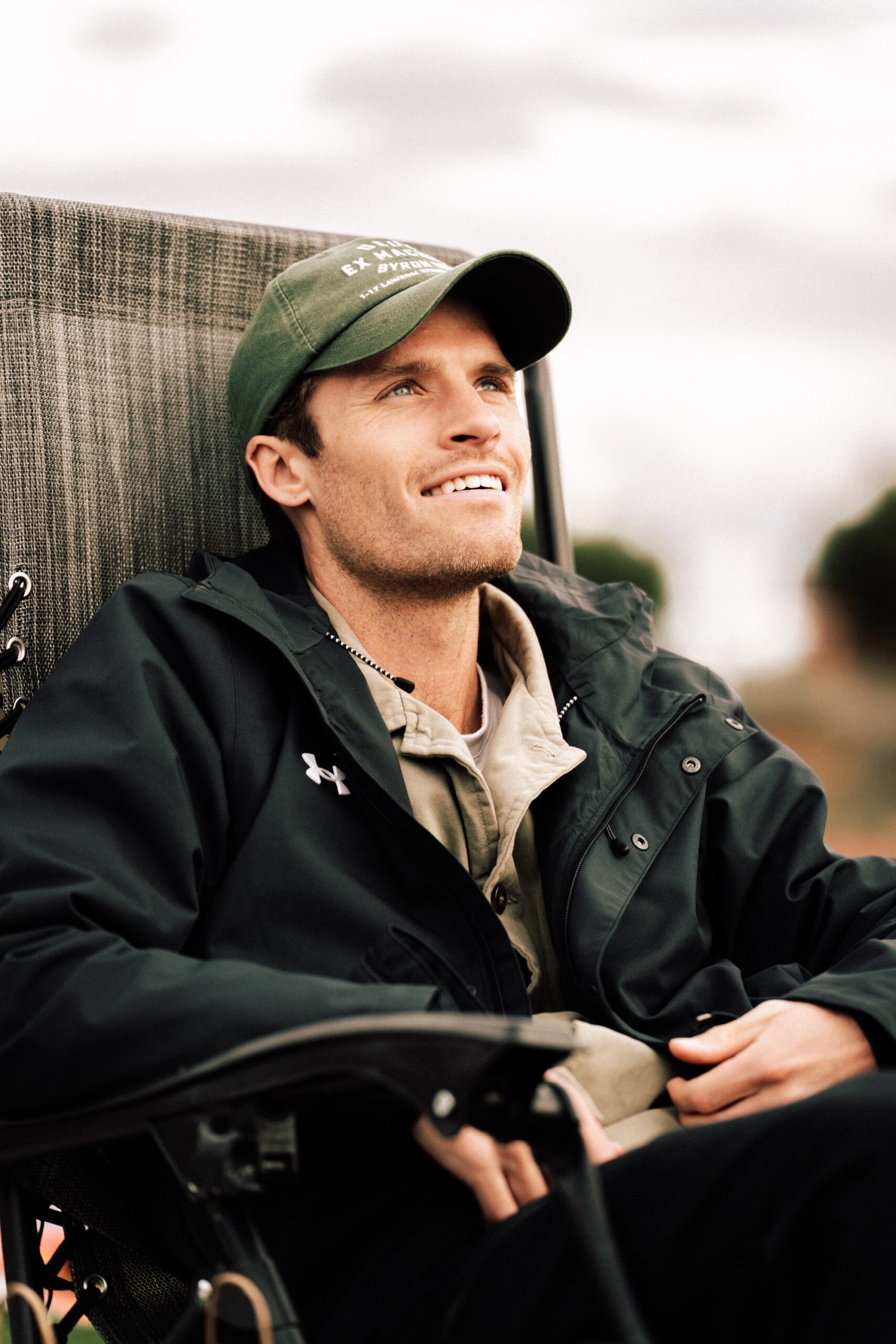
05 Oct Beyond the Track with Grant Grosvenor
Interview by Parker Neumeier, Journalism Student at the University of Wisconsin–Madison
Most people wouldn’t expect to run faster than they ever have in their 30s, much less run a 3:58.58 mile. But Grant Grosvenor is living proof that age is no barrier to determination, training, and drive. So, how did he end up running a mile in less than four minutes and setting a personal best at age 33?
Tracking Down Mile Records in Elementary School
Sports have always been a big part of Grant’s life. Growing up, sports were everything. His parents were constantly driving him and his sister from one practice to the next, from soccer to football and basketball, and eventually to track.
In elementary school, Grant’s PE teacher posted the school’s mile records. This is where his competitive spirit was born. Each year, he had two opportunities to chase down the top mile times. By second grade, Grant was already running the mile in under seven minutes, and in fifth grade, he broke the six-minute barrier for the first time, running a personal best of 5:55.
“That’s when I knew I was good at the mile.”
Track wasn’t his first-choice sport, however. Grant wanted to play soccer. He competed in track at the same time but actively avoided the 800m and mile, opting instead for the 110-meter hurdles, even though he admits the distance events were probably better suited for him.
A Life-Changing Prefontaine Classic
Grant suffered an injury his sophomore year of high school that kept him from playing soccer. During that time, he attended the 2008 Prefontaine Classic at the University of Oregon—a life-changing experience.
In awe of the atmosphere and level of competition, Grant fell in love with track. He began focusing more seriously on running, and during his junior year, competing against stronger athletes, he said, “it started to click that I could take it to the next level.”
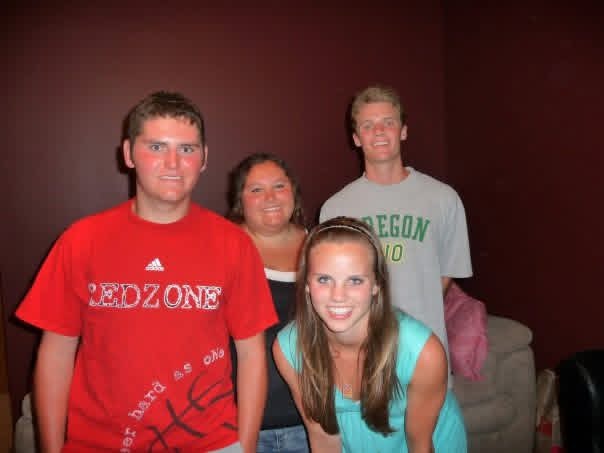 By his senior year, he was ready to out-compete everybody.
Growing up, Grant had always loved the University of Oregon. From sporting any Ducks gear he had to following their football team during the days of Dennis Dixon, it was safe to say Oregon was his dream school from an early age.
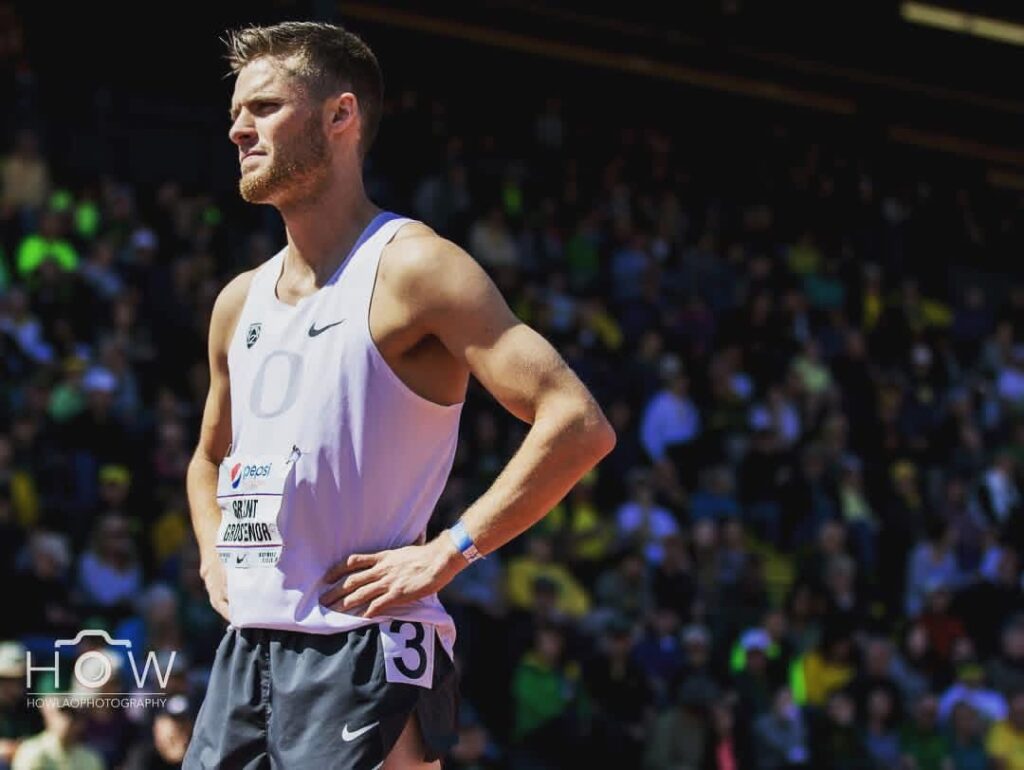
Coming out of high school, Grant committed to Montana State and loved the environment and coaching staff in Bozeman. After several successful seasons in Montana, Grant transferred to the University of Oregon, a fulfilling, full-circle decision that allowed him to compete against some of the best athletes in the country.
Seventh-Fastest in the Women’s Sprint Group
Grant’s first year at Oregon was tough, and during his senior year, he was moved to the sprint team. Due to this last-minute change and scheduling conflicts with the men’s training group, Grant trained with the women’s sprint group.
 “I really enjoyed it because I got to become friends with some of the fastest women in the nation.”
During training, they did a 30m sprint test, where Grant finished seventh among the women’s sprint group.
“That was a pretty core memory. I was like, man, not only am I with the best men’s team, but it was the best women’s team of all time.”
That year, the women’s team won national championships in cross country, indoor track and outdoor track. The experience helped shape Grant into a better runner in new ways.
Sprinting helped him learn who he was as an 800m runner, learning from athletes like Raevyn Rogers, who gave him a new perspective on how to approach the event.
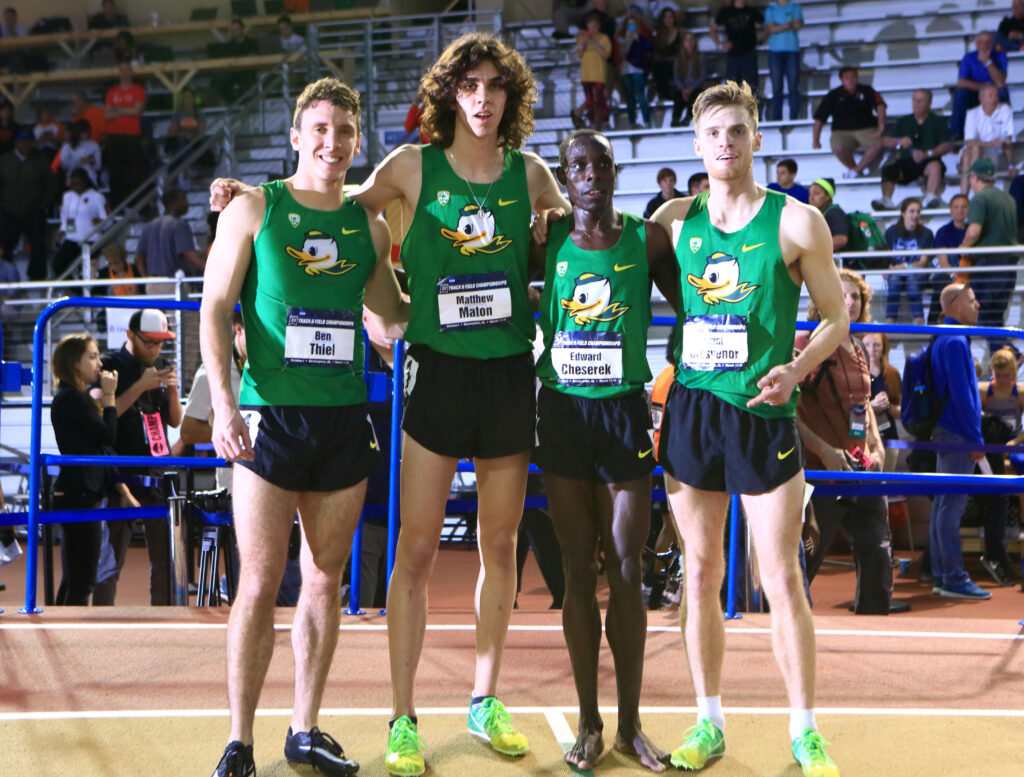
During his time in Eugene, Grant won two national championships with Oregon. He said a highlight was being a part of the winning distance medley relay alongside Edward Cheserek, the most decorated NCAA Division I athlete of all time.
But winning nationals wasn’t quite what Grant expected.
“I didn’t feel as elated as I was expecting to.”
Days after becoming a national champion, Grant said he didn’t experience the fulfillment he was looking for, so the rest of the spring, he felt off.
At the end of his collegiate career, Grant had the opportunity to pursue a professional career. He was on the bubble in the 800m and ended up being just about half a second short of being contacted by agents, making the 2016 Olympic Trials, and continuing his running career beyond college.
These professional opportunities were another reason he made the switch to Oregon during his collegiate career, to open up doors and opportunities for going pro, so the near-miss was devastating.
Transitioning to Corporate America
Following the 2016 Olympic Trials, Grant stepped away from competitive running and entered Corporate America, beginning a period that would last from 2016 through 2023. After narrowly missing the Trials and, with it, the path to going pro, Grant transitioned into a job at Nike. But the transition coming out of elite athletics was very difficult.
“I didn’t adjust well at all. I was still coming down from the fact I hadn’t made the Trials.”
Suddenly, he didn’t like running and he didn’t enjoy exercise. Struggling with motivation, identity, and structure, the period of beginning life in Corporate America became a blur.
After 15 years in a structured sport environment, with required training and people telling you what to do and when, the freedom of not having any of that made it easy to just—not. Working out became a choice, a choice Grant said he kept choosing not to do.
For several years, Grant continued working while becoming increasingly immersed in the party culture surrounding him.
When the COVID-19 pandemic hit, he said every day became a Thursday or Friday, so alcohol, marijuana, and nicotine were attractive ways to loosen up.
Adapting to the party culture of his new working environment, Grant said his poor decisions and partying compounded over time. He always knew that he eventually wanted to try running again, but his new lifestyle was making it increasingly difficult to get there.
Grant knew he needed to look for a way out, but it was hard to break away from the culture he was surrounded by. He was also nervous to try and run again because he didn’t know if his new lifestyle had destroyed his chance to do it.
“Partied-Out”
Walking away wasn’t easy. The people he had met had become his good friends. But slowly he started encouraging himself and others to just exercise a bit more—something simple, something different than partying.
Grant realized that if he wanted to return to elite-level fitness, he almost had to trick himself to gradually start exercising before jumping straight into high-intensity training.
Eventually in 2020, he moved to Arizona to create some separation and focus on work and getting back into shape. His friends and family cheered him on every step of the way.
“Addiction is creepy. It just creeps up on you,” and it’s misunderstood.
Grant says that it’s often not just someone sleeping on the street homeless or in jail. For Grant, addiction was masked under the lifestyle of the people he was surrounded by. It didn’t become clear to him until he was seriously considering getting back into running that he realized trying to live both lives was unsustainable.
By April 2021, Grant officially began competing again. Just a few months later, in July 2021, he set a new personal record. This was an important milestone in his return to the sport and proof that his running career was far from over.
Addiction Parallels Athletics
Looking back on his experience with addiction, he realized that he wasn’t alone. Many athletes have similar experiences after accomplishing big goals like winning a national championship.
“It’s really too bad. It’s the psychology of being an athlete, and [it] brings a lot of addiction out of athletes.”
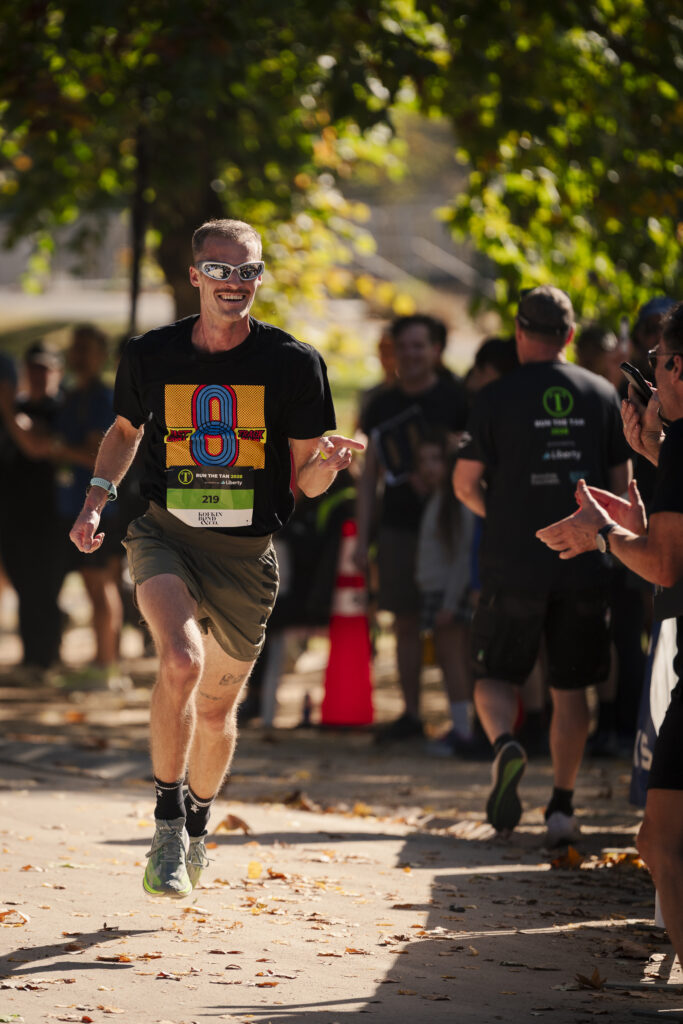 Grant believes athletes are constantly chasing new highs through competition and winning. When they can’t find it in their sport, it’s all too easy to turn to other places to try and find it there.
As he continued training and attending recovery meetings, Grant learned that consistency is key.
Just like in sports, he said, “you don’t just get the PR because you had one good workout. It’s many days of compounding efforts, and the timing is always a little bit later than we would like.”
It’s the same for addiction recovery. He says some days it may not feel any different. Some days it may not feel like anything is working. But days start adding up to weeks, and eventually months, “and all of a sudden, your brain’s not as crowded and certain things start to click.”
Through his continued commitment, Grant has found the cognitive and physical benefits to be incredible. It has also given him the confidence to speak openly about his experience.
“You get to a point where you feel comfortable helping others and giving advice.”
At first, Grant didn’t love sharing his journey. In fact, he said not a lot of his friends even knew he had been struggling. But he realized how many people were experiencing the same things as he was, and they needed a resource.
“It’s been good knowing I can be that person for them.”
A Nerd for Research
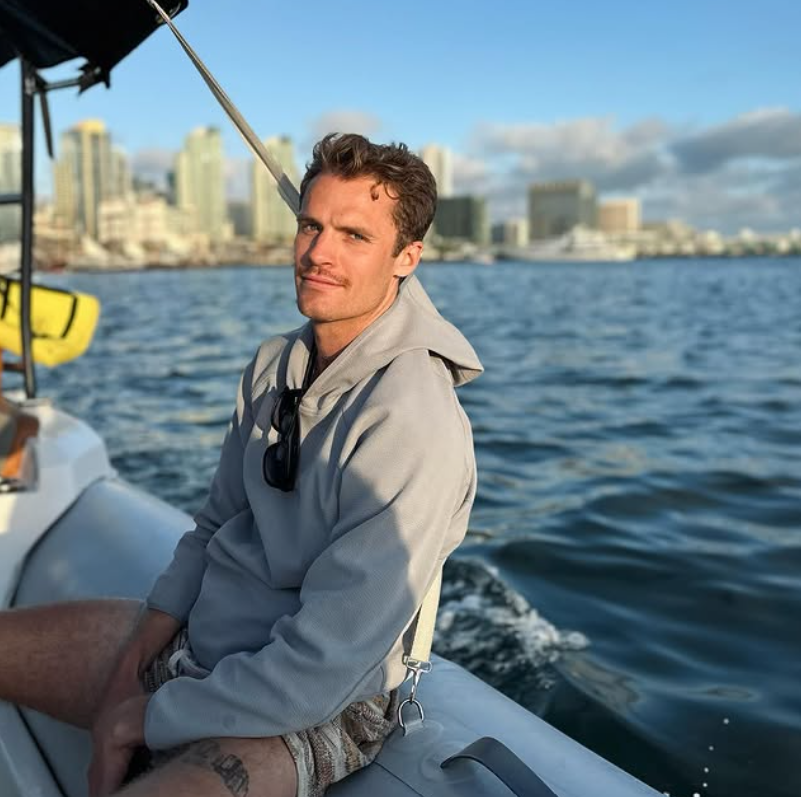
Through his recovery, Grant is once again truly a fan of running and enjoys it a lot more.
Setting personal goals to aim for in running were also incredibly helpful throughout his recovery, and he says running now “has just been a really beautiful experience.”
After returning to competition, Grant continued to build his training and racing career. He trained in Flagstaff, Arizona, before making another major move in September 2025, when he relocated to Melbourne, Australia, to train under Justin Rinaldi and join FAST8 TC.
Outside of running, Grant says if it’s not too hard of a workout week, he enjoys going for walks, being in the Australian sunshine and laying on the beach. He also reads a lot and makes a point to stay away from his phone as much as possible.
In his free time, he teaches himself anything and everything, from learning about artificial intelligence and private capital markets to neuroplasticity. He describes himself as “a nerd for research.”
2028
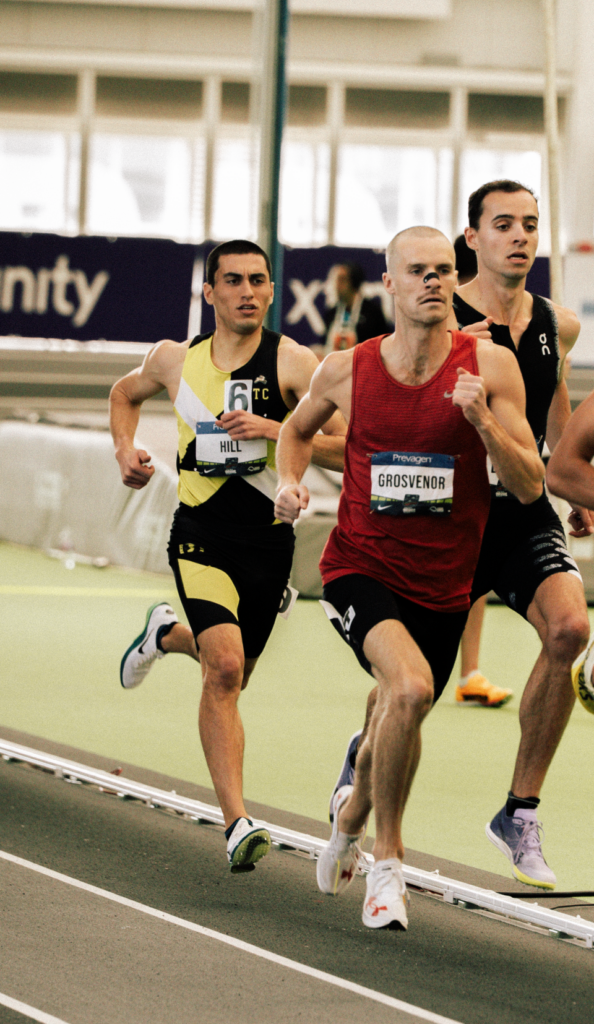 Grant recently set his personal-best mile time of 3:58.58 in January of 2026. Looking ahead, he hopes to qualify for the 2028 Olympic Trials and potentially make the U.S. men’s 800m final. He said he would be really excited for the opportunity to compete at that level and maybe even sneak into the Olympics, where he would be 36 years old.
Between now and then, he’s focused on winning as many races as possible, and becoming sponsored by a shoe brand would be a dream. He continues to meet and connect with new athletes in similar recovery journeys, just being a resource to a stranger who becomes a friend, or someone people can confide in or ask questions to on their road to recovery.
As Grant continues his journey back to the highest levels of the sport, he has also received support through the USATF Foundation’s Adopt-an-Athlete Program, with funding provided by the Burgess Family Foundation. The program provides direct financial support to athletes as they pursue their competitive goals, helping Grant continue to invest in his training and his future in the sport.
Grant’s story is ultimately one of determination and commitment. One of facing challenges and allowing them to push you to be better than ever before instead of backing down or giving up. He is an incredible example of resilience, and his story can inspire millions battling their own forms of addiction.
At his peak performance and seemingly only going up from here, Grant is on top of his game and not planning on slowing down anytime soon.